
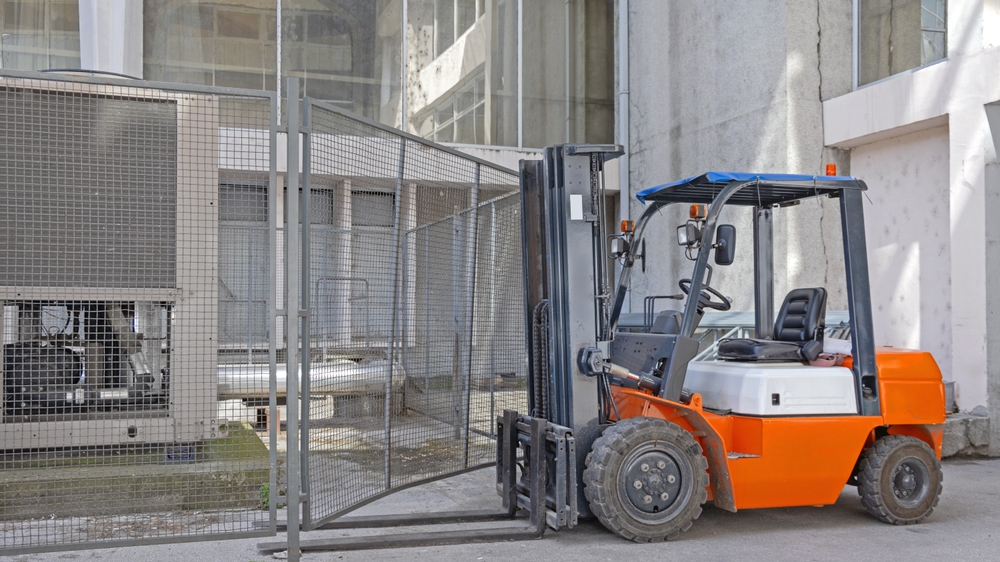
In this article you will learn:
- The importance of each component of a forklift fork, from the blade to the heel to the shank.
- Why maintaining the quality of your fork is important
- How to determine what fork you should get based on the class of truck you’re operating
If you spend your day in a warehouse, the forklift is your most trusted coworker. You rely on it to move thousands of pounds with precision, but how often do we stop to look at the business end of the machine?
At first glance, a forklift fork looks like a simple L-shaped piece of metal. But in reality, it is a highly engineered component designed to handle extreme stress, heat, and weight. For operators and fleet managers, understanding the anatomy of a fork isn’t just about shop talk, it’s about safety, maintenance, and knowing when your equipment is ready for retirement.
At ICHINEN USA, we specialize in Tier 1 forks that meet rigorous ITA (Industrial Truck Association) standards. With this article we will be breaking down what makes up a forklift fork and how it stays connected to your truck.
The Blade
The blade is the part of the fork that does the heavy lifting. It’s the horizontal surface that slides under the pallet. While it looks flat, a high-quality blade actually has a slight taper toward the tip. This makes it easier to enter pallets without snagging the wood.
- The Tip: This is the leading edge. It’s often the first part of the fork to show damage or “rounding” from hitting floors or racking.
- The Blade Face: This is the top surface where the load rests. In premium forks, like those at ICHINEN USA, this steel is 100% heat-treated to ensure it doesn’t bend or set under maximum capacity.
The Heel
If the blade is the arm, the heel is the elbow. This is the most critical stress point on the entire fork. Every time you lift a load, the weight tries to unbend the fork at this 90-degree angle.
To combat this, quality forks feature a thicker heel. If you measure a fork and find the heel is thinner than the rest of the blade, it’s a sign of wear. Once a heel loses 10% of its original thickness, its capacity is reduced by 20%, meaning it’s time to replace it.
The Shank
The shank is the upright part of the fork that stands against the carriage. It transfers the weight of the load from the blade into the truck’s lifting mechanism.
The height of the shank is determined by the “class” of your forklift carriage. The “class” refers to the distance between the top and bottom of the carriage bars:
- Class II: 16 inches (Common for 2,000–5,500 lb capacity trucks)
- Class III: 20 inches (Common for 6,000-10,000 lb capacity trucks)
- Class IV: 25 inches (Heavy Duty)
Using the wrong class is like trying to put a size 10 shoe on a size 12 foot, it won’t seat properly, and it creates a massive safety risk for the operator.
The Connection Point
This is the area most people overlook, yet it is what keeps your load from sliding off or the fork from falling off the truck entirely. Forks don’t just hang there; they are secured via the carriage.
The Carriage
The carriage is the metal platform that moves up and down the mast. It serves as the mounting bracket for your forks and the load backrest. To ensure parts are interchangeable across different brands, the industry uses ITA classes based on the truck’s lifting capacity.
Hook-Type vs. Pin-Type Attachments
There are two primary ways a fork “grips” the carriage:
- Hook Type (Standard): Most warehouse forklifts use hook-type forks. These have two hooks on the back of the shank (an upper and lower hook).
- The Upper Hook – hangs over the top bar of the carriage
- The Lower Hook – slides into a notch at the bottom of the carriage
- The Locking Pin – Located at the top of the fork, this spring-loaded pin drops into a notch on the carriage rail to “lock” the fork in place, preventing it from sliding left or right while you’re turning.
- Pin-Type (Shaft Mount): Common on much larger, heavy-duty trucks (like those used in lumberyards and construction), these forks don’t have hooks. Instead, the top of the shank has a large circular “eye.” A heavy-duty steel shaft runs through the eye of the fork and across the carriage. This is used for extreme weights where a hook might fail.
The Maintenance Checklist
Because you are the one with first-hand knowledge of what is going on with your forklift trucks, you are the first line of defense against equipment failure. During a pre-shift inspection, you should also be looking for these warning signs:
- Surface Cracks – Check the heel and the hooks. Even a tiny hairline crack means the steel’s integrity is gone.
- Difference in Tip Height – If one fork tip sits higher than the other, one of your forks is bent. They should always be level within 3% of the blade length.
- The 10% Rule – Use a fork caliper to check the thickness of the heel. If it is worn down by 10% compared to the shank, the fork is no longer rated for its original capacity.
Choosing the Correct Fork for Your Forklift
A forklift fork isn’t just a hunk of iron; it’s a precision tool. By understanding the anatomy, from the taper of the tip to the Class of the carriage hooks, operators can work more efficiently and safely.
At ICHINEN USA, we take pride in the bones of our forks. Our 100% heat-treating process and focus on ITA standards mean our forks are built for the daily grind of the modern warehouse. When you know your anatomy, you know your limits—and that’s how you keep the floor running smoothly.
Contact us today to get started on choosing the correct fork for your forklift truck.