In this article, you’ll learn:
- The Occupational Health and Safety Administration’s (OSHA) regulations for forklift arms and attachments.
- Why proper maintenance of forklift arms is necessary to worksite safety.
- What to look for to determine if your fork arms and attachments are in good working order.
- What a forklift operator should do in the event their forklift arms need replacement.
These days, there’s hardly a warehouse or construction site in America that is not using forklifts. In fact, no matter your industry, if it’s in logistics of some kind, you can be assured that there will be at least one forklift on site. These versatile machines lift, move, and stack heavy loads with what seems like zero effort. Unfortunately, despite their utility, forklifts are a leading cause of serious workplace injuries. Most of these incidents are caused by user error, but some of them are caused by modifications and attachments.
Attaching arms, clamps and other accessories is a perfectly acceptable modification to make to your forklift. However, they also add new variables. Additional forklift attachments cause change weight distribution, reduce visibility, and change the way the machine is operated. Attachments can turn a safe machine into a dangerous one if not managed correctly.
At ICHINEN USA, we manufacture the highest quality, 100% heat treated fork arms and fork arm accessories and have been at it for a while. In our recent blogs, we have been focusing on forklift safety because we know what can happen when one of these powerful machines is not utilized properly. That’s why we’re choosing to focus on this topic and in this blog, we aim to provide a straightforward look at the Occupational Health and Safety Administration’s (OSHA) recommendations and regulations regarding forklift arms and attachments. That way, you’ll be able to keep your operations compliant and most important, your team safe.
OSHA’s Commitment to Workplace Safety
In our last blog, we broke down how to inspect your fork arms. We discussed a common experience for forklift operators – the OSHA mandated pre-operation inspection. Any certified operator knows that before they operate a forklift for the first time during their shift, they must do a visual inspection of the machine and all of its components to know that it is in functional condition. This inspection came from necessity. With these powerful machines made more accessible, more and more worksite employees were getting injured. Thankfully, we have the Occupational Health and Safety Administration looking out.
OSHA is the federal agency responsible for setting and enforcing standards that ensure safe and healthy working conditions. For powered industrial trucks like forklifts, the regulating document is OSHA Standard 29 CFR 1910.178. While OSHA covers everything from training an operator to proper regular maintenance, there is a strong emphasis on attachment safety because they fundamentally change how a forklift operates.
Imagine it this way: a forklift is a highly engineered machine with very precise requirements. When you add a heavy attachment, you’re not just adding weight; you’re ‘derating’ the machine. Derating means you have reduced its lifting capacity and shifted its center of gravity. When working with a tool designed specifically for balanced lifting, this seemingly minor change can significantly increase tip-over risk or the chances for dropped loads. Hazards like these can even lead to catastrophic accidents. For OSHA (and for us at ICHINEN USA), compliance with these regulations isn’t just about avoiding a fine – it’s about preventing those injuries and fatalities in the first place. These rules are in place so that every modification is carefully considered and implemented correctly. That way, every person on the worksite is protected.
A Daily Commitment to Inspection and Maintenance
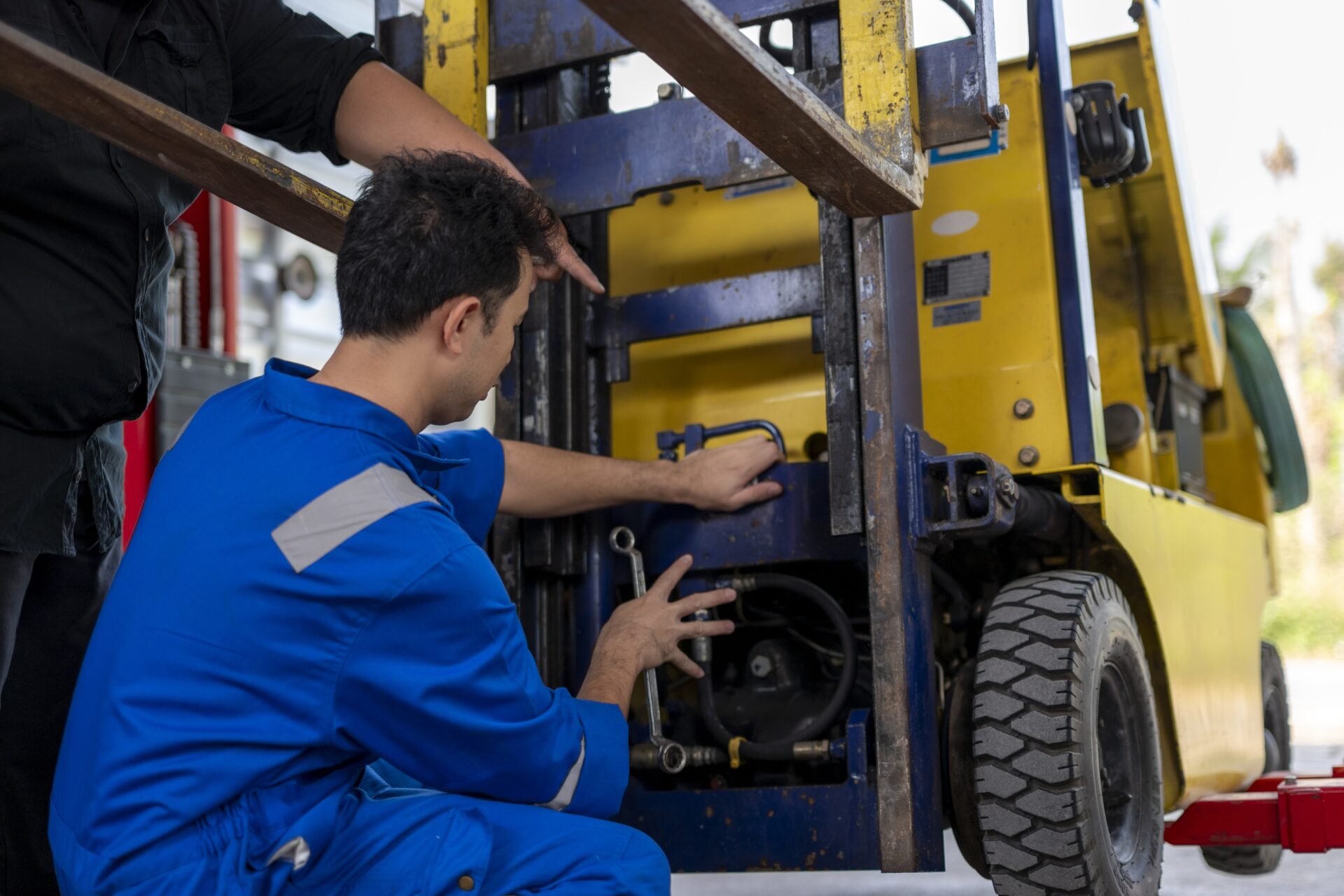
Compliance is not just a one time commitment; it is a continued agreement that starts at the beginning of every shift. Forklift operators are specially trained professionals who are capable of making a big impact on their worksite. While a standard pre-operation forklift inspection should happen any time a forklift is being used for the first time during a shift, the inspection must be tailored to include the specific fork arm attachment. These inspections are a big part of protecting your operation from making common forklift safety violations.
Once the attachment has been properly secured and before the operator turns the forklift key, a pre-operation inspection of that attachment is required.
The visual inspection should include:
Attachment Integrity: Check for any signs of cracks, bends, or other damage to the attachment itself. Do not forget to inspect the underside, where the attachment can drag when used close to the ground.
Hoses and Connections: Inspect the hydraulic hoses for any leaks, frayed spots, or cuts. Ensure all pills and locking mechanisms that are used to secure the attachment to the forklift are properly seated and secure.
Smooth Operation: Once the engine is on, test the attachment. It should move without any hesitation or jerky motions. And, there should be no unusual noises.
In the event that an operator discovers an issue with their forklift or fork arm attachments, they should immediately stop using the machine, and follow proper procedures to lock-out-tag-out the forklift until a more thorough inspection can be done to determine what further action should be taken. Never operate a forklift that does not pass OSHA’s Pre-Operation inspection checklist.
Empowering You to Move Forward
At ICHINEN USA, we’re grateful to be a part of ensuring forklift safety is front and center for our customers across all industries. From agriculture to entertainment, forklifts ensure that our economy keeps flowing. That’s why we’re committed to getting the highest quality fork arms and forklift accessories to those who need them. Take a moment to determine if your forklift arms are in need of replacement, and then check out our inventory of 100% heat treated fork accessories to see which one is right for you.
And, if you need some help determining the right fit, don’t hesitate to contact us today!